image description
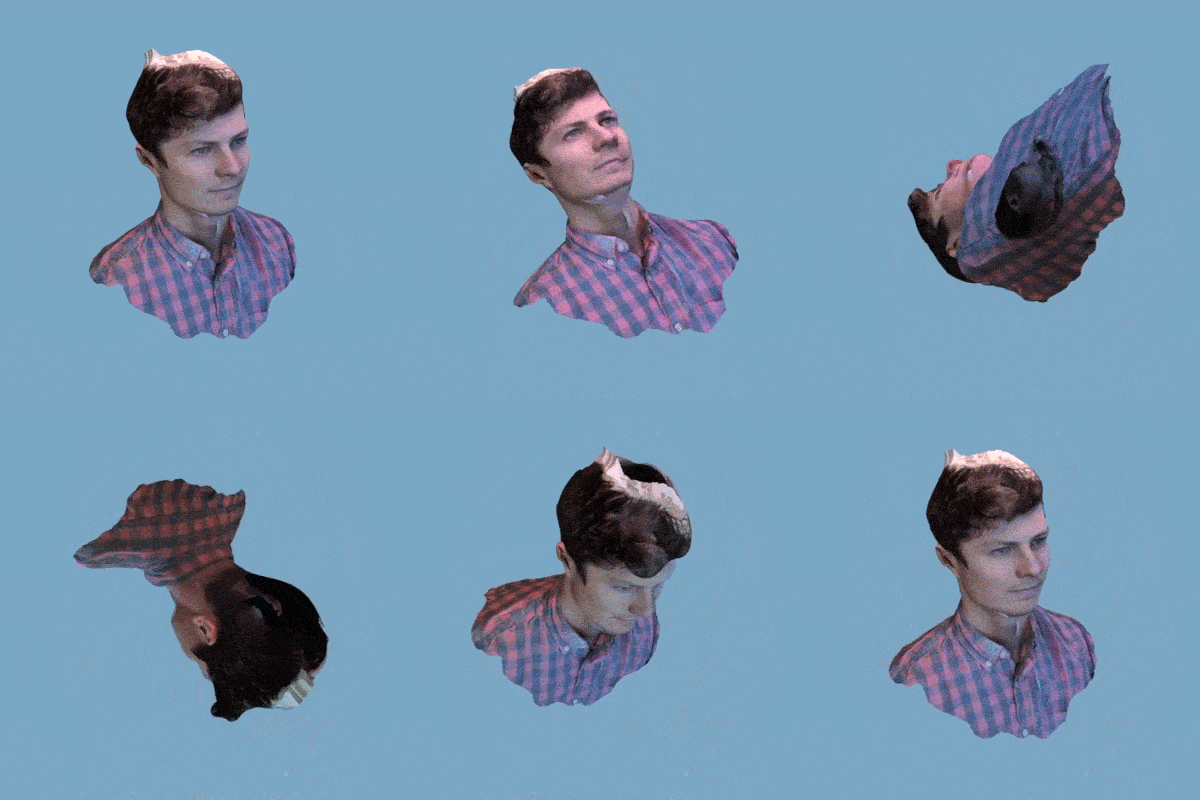
In this 3D scan, Avery wears a pink and gray checkered shirt and a fairly close-cut hairdo. His pink skin appears blue-gray; the baby blue background of the image seems to affect all the colors. Every second or so, Avery's head and shoulders complete a full backwards rotation, spinning like a wheel with its hub at Avery's neck.
Bio
Avery Lawrence lives in Ann Arbor, Michigan. He was born and raised in Charlottesville, VA. He has a BA in Visual Studies from The University of Pennsylvania and an MFA in Art from The California Institute of the Arts. Until recently, he managed artist projects at The Fabric Workshop and Museum and taught studio courses at the University of Pennsylvania. Less recently, he worked at a frame shop, drove a pedicab, installed wedding tents, taught afterschool puppet classes, and participated in a number of paid research studies.
He has shown his video, performance, and installation work at the Weisman Art Museum (Minneapolis), Weatherspoon Museum of Art (North Carolina), the Museum of Contemporary Art in Jacksonville (Florida), The Orlando Museum of Art (Florida), the Contemporary Art Center in New Orleans (Louisiana), The Ogden Museum of Southern Art (Louisiana), The Peeler Art Center (Indiana), and various galleries, art fairs and film festivals.
Artist Statement
Fabrications sustain my work. The word fabrication (from fabricare: to make, to construct) describes the objects and stories that we craft for ourselves and each other. Fabrications, in terms of products, lean on the extractive, exploitative, and dehumanizing practices of capitalism. Fabrications, in terms of untruths, deceive and debase. But fabrications also flourish outside systems of exploitation and deception. Artists fabricate fictions with words, sounds, and materials that speak to broader truths and shared experiences.
My interest in fabrication started with the puppets in my mom's therapy office. A furry family of beautifully-constructed dead things helped people in crisis build a fictive space for real emotion, real communication. This interest has since evolved into a curiosity with how we determine what is real and not real. This interest push/pulls me towards a place of indeterminacy, a place where I hope to fabricate my art.